
Thuja
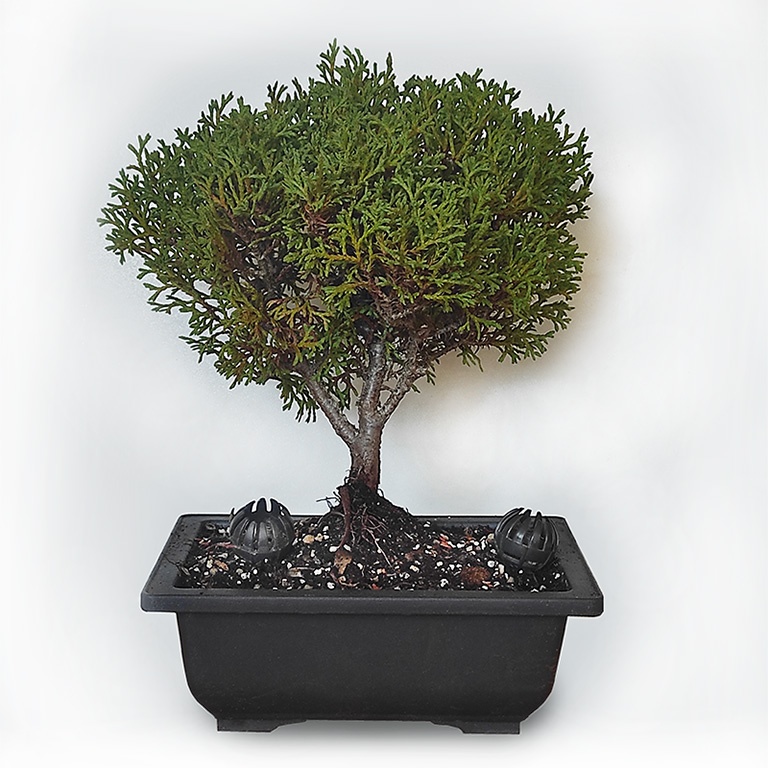
Thuja is not the easiest, but quite a respectable material for growing bonsai.
Advantages:
- evergreen plant;
- tolerates pruning well;
- small scaly needles;
- easy to shape with wire at a young age.
Location:
- street, garden, balcony...
- open space;
- good air circulation;
- light partial shade at noon
Thuja is an outdoor plant and is not suited to permanent residence in an apartment.
Permissible:
Thuja is not the easiest, but quite a respectable material for growing bonsai.
Advantages:
evergreen plant
tolerates pruning well;
small scaly needles
easy to shape with wire at a young age.
Location:
- street, garden, balcony...
- open space;
- good air circulation;
- light partial shade at noon
- Thuja is an outdoor plant and is not suited to permanent residence in an apartment.
- permissible in a room 2–7 days, where temperature up to +18 °C;
- Provide additional lighting (see here)
Temperature
Spring:
+5...+18 °C, full sun is possible
- not afraid of light frosts down to −3 °C
Summer:
+18...+28 °C, above +30 °C — mandatory shading
the pot should not overheat
place the pot in a larger container with pebbles (see here)
Autumn:
- maximum light;
- gradual cooling;
- no sudden changes.
- buds for the following year are laid in autumn.
Winter
−5…+5 °C – dormant in semi-darkness, soil slightly moist
Soil
Ideal composition:
40% akadama
30% pumice
20% lava (drainage)
10-15% organic matter (see here).
Transplanting
young plants – once every 2 years;
adult plants – once every 3–5 years.
early spring, before growth begins.
remove 20–30% of the roots.
Do not completely expose the roots from the soil in order to preserve the mycorrhiza.
After transplanting: shade, no fertilizer for 3–4 weeks.
Watering
The soil should always be slightly moist, but not wet.
In summer — daily, sometimes twice a day.
In winter — rarely, but do not let it dry out.
Use soft water.
Fertilization
spring–summer: once every 2 weeks;
autumn: once a month;
winter: do not feed.
organic fertilizers (see here)
Formation
During the period of active growth
Remove: weak, inward-growing, and competing branches
Wrap with soft wire
Check every 2–3 weeks
Pinch young tips;
gradual pruning (no more than 30% at a time) along green scales;
emphasize tiers.
Common mistakes
- keeping indoors;
- pruning old wood;
- infrequent watering;
- heavy soil;
- small pot.