
Ligustrum
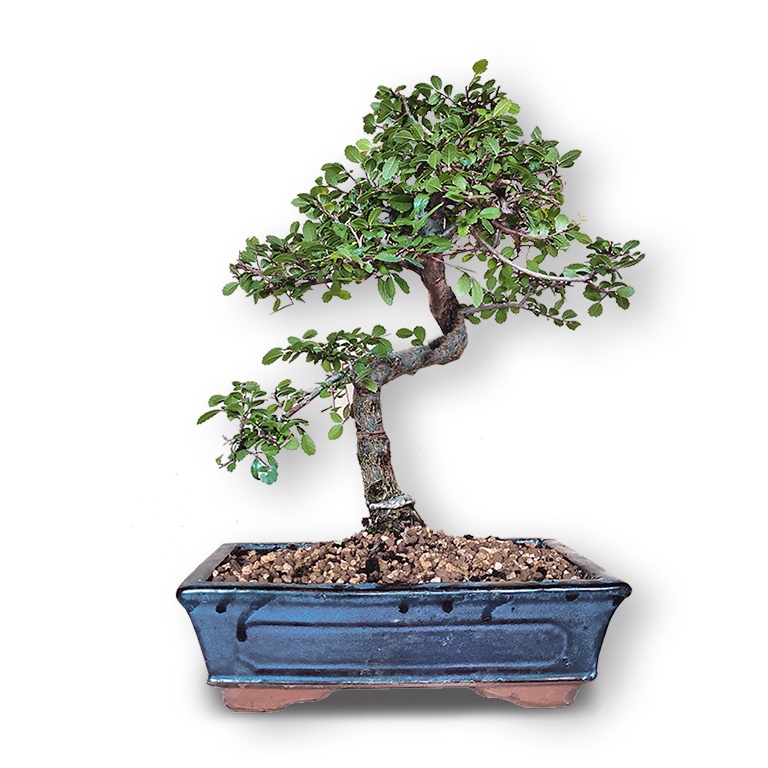
Ligustrum sinensis (Chinese privet) - one of the best plants for bonsai, especially for beginners:
- recovers quickly after pruning;
- easily forms small leaves;
- tolerates wire shaping well;
- can be grown as indoor, balcony, and garden bonsai;
- produces beautiful white flowers and black berries.
Biology
deciduous plant;
evergreen in warm climates;
sheds some of its leaves in winter in temperate climates.
Lighting
- bright light, at least 6-8 hours a day.
Location
South, southeast, southwest window.
Lighting
- Lots of light: small leaves, dense crown.
- Lack of light: large leaves, elongated shoots.
In summer, take outside/to the balcony, with protection from the midday sun.
In winter: at +10...+15° C, additional lighting is not necessary.
at +18...+22° C, grow light for 10–12 hours (see here)
Temperature
In summer: +18...+30° C
In winter, dormant: +5...+12° C
In winter, indoors: +15...+18° C
Cool wintering is preferable, but it can survive without it.
Watering
- evenly moist substrate without water stagnation
- abundant watering in summer, often (every day in hot weather)
- infrequent in winter, after the top layer has dried
- soft, settled water at room temperature
- sheds leaves when over-dried
- root rot forms when over-watered
Use a watering indicator to control (see here)
Air humidity
- Not critical, tolerates dry air in the apartment.
- Recommended: spray 2–3 times a week;
- Warm shower once a month.
A sensor is needed to monitor humidity and temperature (see here)
Soil and pot
Ligustrs loves air- and water-permeable soil.
Ideal substrate
50% akadama
25% pumice
25% lava rock (drainage)
It is recommended to add 10% organic matter (see here).
Repotting
- Young plants: once a year
- Adults: once every 2-3 years
The best time is early spring (before active growth).
Root pruning: easily tolerates up to 40% pruning.
Always keep small suction roots.
After transplanting: partial shade for 7-10 days, no fertilizer for 3-4 weeks.
Pruning and shaping
Supportive: when the shoot has reached 6–8 leaves, prune to 2 leaves.
Shaping: pruning (spring–summer) can be heavily shortened
Tolerates wire well, but check every 2–3 weeks;
Partial defoliation (removal of leaves) is possible on healthy plants
to reduce leaf size.
Fertilizer
From March to October, every 10–14 days, apply organic fertilizer for bonsai
or mineral fertilizer, (see here)
In winter:
do not feed during cold wintering, during warm wintering - once a month.
Flowering and berries
Flowering: late spring to summer.
White, sweet-smelling flowers.
Black berries, formed in good light.
For flowering: don't prune too much in spring, let the shoots become mature.
Diseases and pests
- aphids
- spider mites
- scale insects
Diseases
- root rot (rare)
- fungal spots
Prevention:
- fresh air
- good drainage
- regular inspection
- neem oil preparations (see here)
Common mistakes
- warm wintering without light;
- rare pruning results in large leaves;
- growing in constant shade;
- formative pruning is done at the same time as transplanting.