
Sakura bonsai
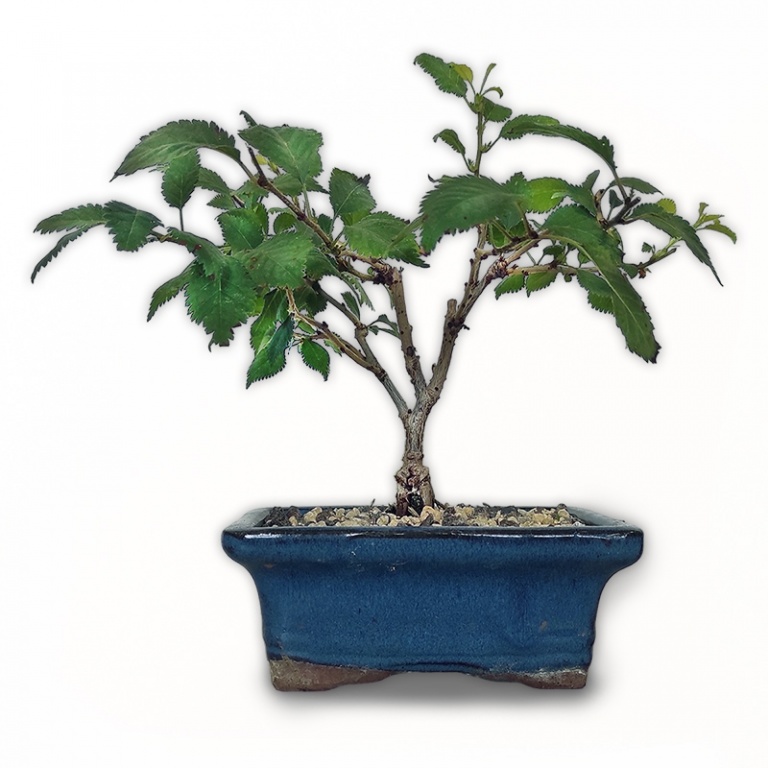
Sakura bonsai is not a “houseplant” but a real miniature deciduous street tree.
With proper care, it can live for 100 years or more.
Location
Ideal location: street, garden, terrace
Balcony (open or well ventilated)
Loggia with windows that open
If the cherry tree is temporarily in an apartment, the following is required:
- supplementary lighting (see here)
- ventilation;
- humidity (50-60%).
Lighting
6–8 hours of sun per day, in winter – a phytolamp (see here)
Morning and evening sun is best
At noon – light partial shade
Constant direct sunlight causes the roots in the pot to overheat
Temperature
Active season (April–September) +15…+25 °C
Can tolerate up to +28 °C for short periods
Above +30 °C — stress, burns
Below +10 °C — growth stops.
The best place is outside, on a balcony, or in the garden.
Autumn (preparation for dormancy)
September: +15...+18 °C
October: +8...+12 °C
Flower buds are formed at this time - do not bring indoors suddenly.
Wintering
0...+5 °C
down to –5 °C (briefly and with pot protection)
–10 °C – risk of root death
above +30 °C – stress
below +10 °C – growth stops
Spring
initially +5...+10 °C;
then +12...+15 °C and only then higher
Sudden heat causes buds to drop.
Temperature control (see here)
Repotting
Young trees: once a year
Mature trees: once every 2–3 years
Best time: early spring
Root pruning stimulates compactness:
- remove up to 30% of the roots, especially long and twisted ones
Soil
Must be:
- very well drained;
- breathable;
- slightly acidic (pH ~5.5–6.5);
- nutritious, but not “rich”;
- not waterlogged;
- not dense, like ordinary soil.
Sakura roots are thin and rot easily.
Composition:
50% akadama
25% pumice
25% lava (drainage)
It is recommended to add 10-15% organic matter (see here)
Watering
Water when the top layer of the substrate is 1 cm dry.
The soil should always be slightly moist, but not wet.
Overdrying is more dangerous than short-term overwatering.
Water slowly and correctly until water appears from the drainage holes.
It is better to water 2-3 times with a 1-2 minute pause than to water once heavily.
Use soft, settled water at room temperature.
Spraying is not a substitute for watering.
Reduce watering in cold weather and low light.
Watering control (see here)
Formation
Wire:
- aluminum or copper wound at a 45° angle
- keep for 2–6 months
- Check that the wire does not grow into the bark!
Pruning
Formative — in spring
Supportive — in summer
Sanitary — all year round
Remove:
- vertical shoots;
- branches growing inward;
- shoots that are too long (leave 2–3 leaves).
Wintering
Without winter dormancy, cherry blossoms will not bloom and will die.
- Temperature: 0...+5 °C (balcony, basement, cold loggia);
- Infrequent watering (once every 2–3 weeks).
Cherry blossoms do not thrive in apartments.
Conditions for flowering:
- proper wintering;
- good lighting;
- moderate pruning (not before flowering);
- flower buds form in the fall.
No flowering:
- heavy pruning before flowering;
- lack of light;
- growing as a “houseplant.”
Common mistakes:
- kept indoors all year round;
- warm wintering;
- sudden temperature changes;
- overheating of the pot in the sun;
- too frequent watering.