
Carmona 2
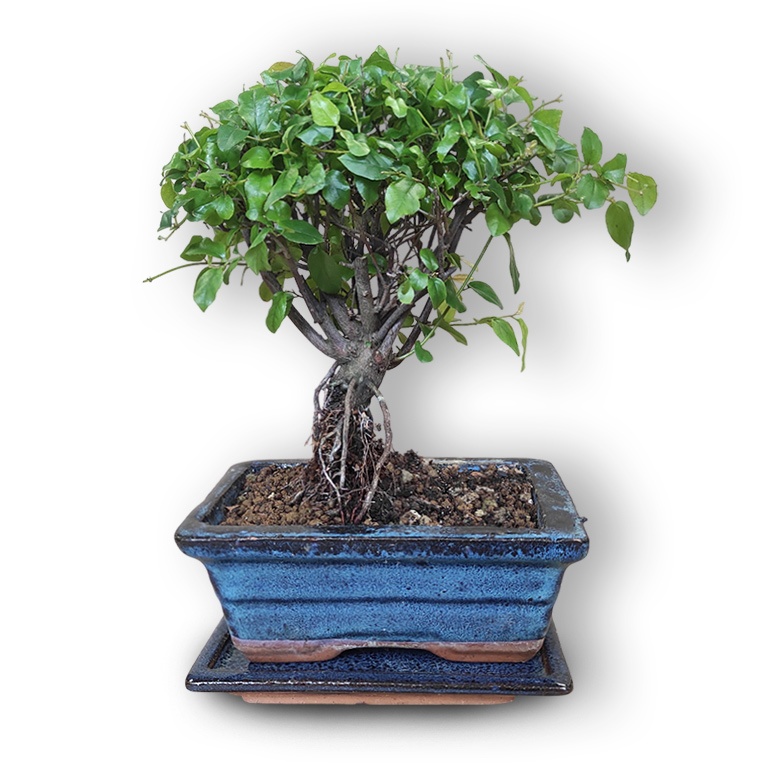
Carmona is a tropical evergreen tree native to Southeast Asia.
It is usually sold in stores under the name “indoor bonsai,”
but in reality, this plant is very sensitive and does not forgive mistakes in care.
But if everything is done correctly, it can live and bring joy for up to 100 years.
It teaches patience, punctual care, and stability.
Features:
- small glossy leaves with white dots;
- blooms with small white flowers;
- rarely, but can produce red berries;
- does not tolerate rearrangement and sudden changes in conditions well.
- grows slowly, so it is ideal for miniature forms.
Lighting
- bright diffused light 10-12 hours a day;
- best location: south or southeast window;
- direct midday sun causes leaf burns;
- with insufficient light, shoots stretch, leaves fall off, and there is no flowering.
- in winter necessary to supplement lighting with a phytolamp for 10-12 hours a day. (see here)
Temperature
- In summer +22 ... +28 °C
- In winter +18 ... +22 °C
- Below +15 °C causes stress and leaf drop.
- Drafts and sudden temperature changes are unacceptable.
- Does not like being moved, even turning the pot.
Watering
- The soil should always be slightly moist, but not wet
- Use soft water that has been settled for 24 hours, at room temperature
- 3-5 times in summer, 1-2 times in winter
- Overwatering causes root rot
- Drying out causes massive leaf fall
Use a watering indicator to monitor (see here)
Air humidity
- Carmona is a tropical plant, so 60-80% is optimal.
Humidity can be increased by using a tray with wet pebbles, spraying,
a humidifier, etc.
A sensor is needed to control humidity and temperature (see here).
Soil
The substrate should be loose, air- and water-permeable, with a pH of 4-6.
-Carmona does not tolerate heavy soil.
Ideal composition:
40% akadama
30% pumice or kiryuzuna
20% lava rock (1-2 cm drainage layer)
10% peat
(see here)
Transplanting
- Only in spring: once every 2–3 years
- Carefully remove some of the old soil
- Trim the roots (no more than 30%)
Do not shape the crown at the same time as transplanting.
After transplanting: 2 weeks without fertilizer, shade, increase humidity.
Pruning and shaping
- when the shoot grows to 6-8 leaves, shorten to 2-3 leaves;
- shape gradually, not all at once;
- wire can be used carefully (check every 1-2 weeks).
Fertilizer
- From March to October, once every 2 weeks;
- Feed with special bonsai fertilizer (see here).
In winter: do not feed
Flowering and berries
For flowering, the following is necessary:
- plenty of light;
- stable temperature;
- regular watering;
- moderate feeding.
Flowers appear only on young shoots.
Diseases and pests
- spider mites (dry air);
- scale insects;
- mealybugs.
Prevention
- high humidity;
- inspect leaves;
- warm shower once a month;
- neem oil preparations (see here)
Common mistakes
- moving the pot;
- cold water;
- dry air;
- heavy soil;
- overwatering.